Part 5 of 6 in the stiff and aching neck and shoulder series. Part 1 is "blocked means pain" and the four words; part 2 is sinew, bone and cold; part 3 is the NHS account and the two packs; part 4 is a table of five situations; part 6 is when to see a doctor.
A neck and shoulder that loosens with a rub and is back the next day — massage shop, or consultation? The difference is not the force. It is what happens before a hand touches you.
The short version
- A consultation's usual order is four steps: ask, look at range of movement, screen out what needs a doctor first, and only then decide the direction.
- A massage shop offers relaxation; TCM tuina is manual therapy after a practitioner's assessment — there is a consultation before it, a judgement, and situations where it is not done.
- The Qing-dynasty《医宗金鉴》sums tuina up as "placing the injured bone and sinew with both hands so that they return to their former state"; on that basis the HKU column explains that everything from very gentle pressing, rubbing and kneading to large joint movements counts as tuina.
- An online consultation can do steps one, three and four; for step two, the practitioner asks you to describe the range, and a hands-on check needs an in-person visit.
First, the things that cannot wait
Chest pain that feels tight or squeezing, or chest pain spreading to your arms, neck or jaw — call 999 now, or go to the nearest hospital emergency department. The NHS heart attack page lists both chest pains among its reasons to call 999, and states that a heart attack happens when blood flow to the heart is blocked. This is an emergency, not a consultation booking.
Persistent numbness or weakness in the arm or fingers — get urgent help. The NHS lists "pins and needles that do not go away" and "no feeling in your arm or shoulder" among the reasons to get urgent help.
The full list is in part 6.
A note: this section is general information only. For conditions like these, follow your doctor's diagnosis and treatment, and seek medical attention when you need it.
I. A consultation's usual order: four steps
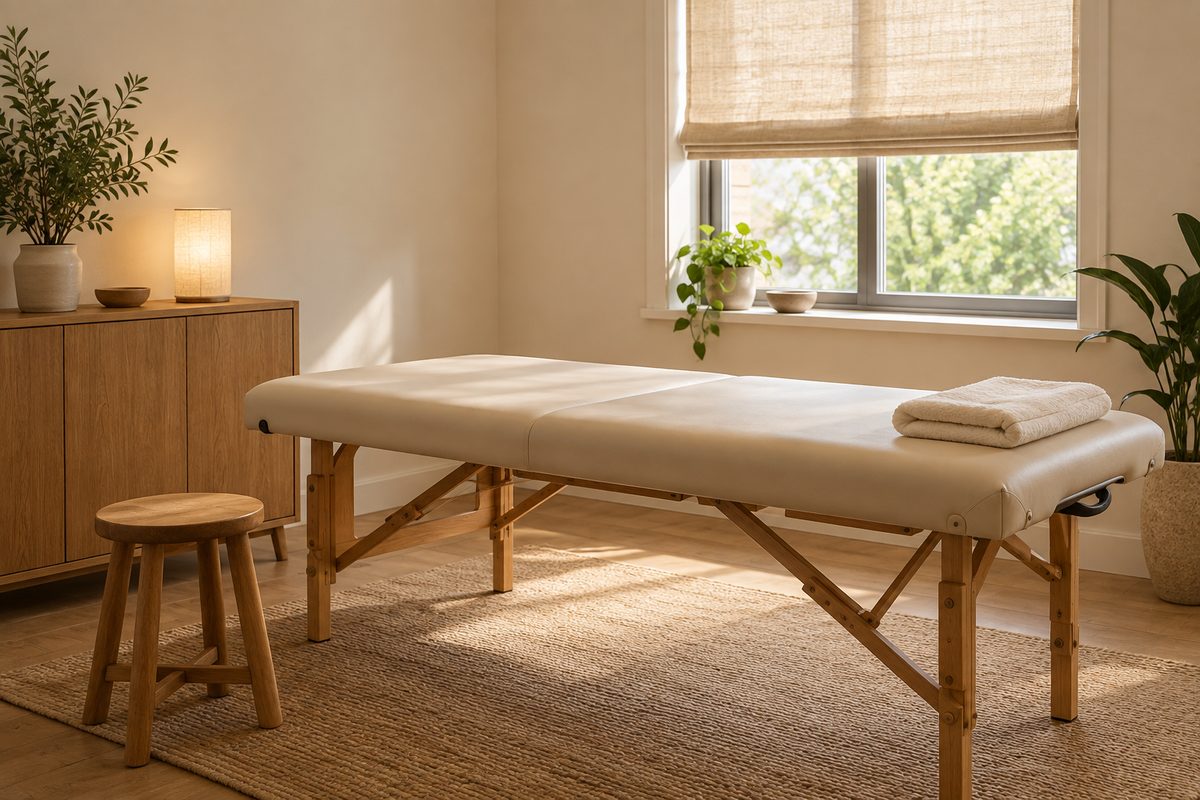
- ① Ask first: location and extent (back of the neck, top of the shoulder, between the shoulder blades, or into the arm); how it changes across the day (worst on waking, or built up by the afternoon); the relationship to posture (which movement worsens it, whether changing position eases it); whether anything comes with it (headache, dizziness, numbness in the hand, disturbed sleep); stress and routine (whether tense periods worsen it, whether weekends differ from workdays).
- ② Look at range of movement first: turning the head, raising the arm, reaching behind — at which angle it hurts or catches. This step separates "cannot turn it" from "can turn it but it hurts".
- ③ Screen out part 6 first: with numbness, weakness, pain after an injury, fever or loss of bladder or bowel control, the practitioner sends you to a doctor before doing anything hands-on.
- ④ Only then decide the direction: acupuncture, tuina, herbal medicine, or starting with the everyday directions. The HKU column says it plainly: do not assume treating pain must mean using force. Light or firm follows the distinction in part 4 — sinew held tight, or bone out of position.
Which of these, whether at all, and when, is the practitioner's judgement after seeing you; this article predicts no outcome.
💡 Remember: the difference between a consultation and relaxation is not the force; it is the three steps before it.
II. How that differs from a relaxation massage
It is not a question of which is better, but of which one you need right now. A massage shop offers relaxation; TCM tuina (推拿) is manual therapy after a practitioner's assessment — there is a consultation before it, a judgement, and situations where it is not done.
The Qing-dynasty《医宗金鉴》sums tuina up as "placing the injured bone and sinew with both hands so that they return to their former state", and on that basis the HKU column explains that everything from very gentle pressing, rubbing and kneading to large joint movements counts as tuina.
So "is tuina just pressing harder?" is answered by the definition: light and firm both count as tuina, and the difference is in those three steps before it. The detail is in tui na or massage?.
Don't rush to have someone "press harder". Hands-on work near the neck should follow assessment, especially when there is numbness or weakness.
III. Which steps an online consultation can do
What an online consultation can do is ①, ③ and ④ — ask, triage, explain the direction. For ②, the practitioner asks you to describe the range; a hands-on check needs an in-person visit. In-person consultations are coming soon.
On the overall order of a pain consultation: how TCM approaches pain. If you are unsure where your situation should go: when an online consultation is not the right choice.
⚠️ A safety note: TCM and Western medicine complement each other; it is not a choice between them. A great deal sits close together in the neck, so when there is numbness, weakness or anything nerve-related, medical assessment first is the sounder order — see part 6.
Frequently asked
Can I go for a massage? It is not a question of which is better, but of which one you need right now. A massage shop offers relaxation; TCM tuina is manual therapy after a practitioner's assessment. The difference is in part 4: a consultation first distinguishes whether this "blockage" leans to sinew or to bone, then decides light or firm; a relaxation massage does not need that step. The HKU column's words: do not assume treating pain must mean using force.
The NHS shoulder-pain page adds: do not completely stop using your shoulder, and do not make up your own strenuous exercises. For the situations in part 6, neither is the first step — see a doctor.
Can acupuncture be used for the neck and shoulders? It can be discussed. Acupuncture, tuina and herbal medicine are the directions a practitioner typically considers (part 1); whether and how any is used is the judgement of the practitioner who has seen you, and this article predicts no outcome.
Acupuncture is an in-person procedure, and HansMed Modern TCM's in-person consultations are coming soon; an online consultation can ask, triage and explain the direction first. For the kind where the arm will not lift: is shoulder pain always frozen shoulder?
Is numbness in my hand a neck problem? Possibly, possibly not — telling that apart is the doctor's job. One direction the American Academy of Orthopaedic Surgeons' patient page describes: a nerve in the neck compressed or irritated where it branches away from the spinal cord, with pain that may radiate into the shoulder and arm and may come with muscle weakness and numbness.
The NHS lists "pins and needles that do not go away" and "no feeling in your arm or shoulder" among the reasons to get urgent help. So the answer to numbness is not in TCM theory; it is with the doctor — see a doctor first, and talk TCM once there is a judgement.
The words in this part
- Tuina (推拿) — TCM manual therapy. On the《医宗金鉴》definition as the HKU column relays it, everything from very gentle pressing, rubbing and kneading to large joint movements counts.
- Manual therapy (手法治疗) — hands-on work done only after a practitioner's assessment, with a consultation and a judgement before it, and situations where it is not done.
- Range of movement (动作范围) — what step two looks at: turning the head, raising the arm, reaching behind, and at which angle it hurts or catches.
- Treating sinew and bone together (筋骨并重) — the central idea of TCM orthopaedics in the HKU column's words: light and firm combined, sinew and bone read together.
The other five parts
- Part 1: "Blocked means pain", and the four words
- Part 2: Sinew or bone, and why cold makes it worse
- Part 3: The NHS account: movement, heat and cold
- Part 4: Five common neck-and-shoulder situations
- Part 6: When to see a doctor first
👉 If you are not sure "whether this neck and shoulder should go to a massage shop or to a consultation", you are welcome to bring it to an online consultation with HansMed, where a practitioner registered under the T&CM Act 2016 can assess it; if anything in the section above or in part 6 applies, see a doctor first. In-person consultations are coming soon.
Sit with a licensed TCM practitioner from wherever you are.
HansMed Modern TCM
For general wellness education only — not medical advice. Consult a registered TCM practitioner for personal guidance.
Sources
- University of Hong Kong, LKS Faculty of Medicine, School of Chinese Medicine, "TCM tuina technique and the treatment of pain", Chan Ka-wing, am730 column, 14 July 2025 — https://www.med.hku.hk/zh-hk/media/knowledge-exchange/newspaper-columns/2025/jul/am730_20250714
- NHS, Shoulder pain, page last reviewed 22 May 2023 — https://www.nhs.uk/symptoms/shoulder-pain/
- NHS, Heart attack, page last reviewed 31 March 2026 — https://www.nhs.uk/conditions/heart-attack/
- AAOS OrthoInfo, Cervical Radiculopathy (Pinched Nerve) — https://www.orthoinfo.org/en/diseases--conditions/cervical-radiculopathy-pinched-nerve/