Part 6 of 6 in the "Chinese herb risks and checkpoints" series. The list of the other five is at the foot of this part.
The first five parts were about things: which class has a record, how to check it, how to store it. This part is about people — the situations where you ask first and drink second.
This is the part of the series to read first. Every item below names its source; the signs themselves and their tiers are unchanged, and all that has been added is a reason.
The short version
- Grouped by situation, not by constitution: on Western medication, surgery coming up, pregnant or trying or breastfeeding, infants and children, older adults and anyone under long-term review.
- If you experience discomfort or an unusual reaction after taking herbs, stop taking them and contact your practitioner.
- A severe allergic reaction (such as difficulty breathing or facial swelling) or loss of consciousness is the one item that means calling 999 now — the reason is on that item below.
- Never stop or adjust your Western medication on your own. Stopping a herb and changing Western medication are two different things.
A note: this section is general information only. For conditions like these, follow your doctor's diagnosis and treatment, and seek medical attention when you need it.
I. Situations that need extra care
Grouped by situation, not by constitution.
- On Western medication. How herbs and Western medication are arranged is in "Can You Take Chinese Herbs With Western Medication?" (/chinese-herbs-with-western-medicine/). Let both your TCM practitioner and your doctor know what you take; never stop or adjust your Western medication on your own.
- Surgery coming up. Singapore's HealthHub (Ministry of Health, content by the Health Sciences Authority) says: if you are scheduled for a surgical operation, inform your doctor about any Chinese proprietary medicine you are taking; some products may interfere or interact with anaesthetics and other medicines used during surgery, and you may also be required to stop taking them before the operation. Whether and when to stop is the surgical team's call.
- Pregnant, trying, or breastfeeding. Singapore's HealthHub (Ministry of Health, content by the Health Sciences Authority) notes that Chinese proprietary medicines carry information on documented side effects and contraindications, such as pregnancy and lactation, on their labels. If the label says so, do not use it; if the label says nothing, ask a practitioner first.
- Infants under 12 months, and children. Singapore's HealthHub (Ministry of Health, content by the Health Sciences Authority) notes that in general, Chinese proprietary medicine should not be given to infants under 12 months of age unless advised by a TCM practitioner. For older children, give the practitioner the age, the weight and what is in the packet together.
- Older adults, chronic conditions under regular review, and anyone with an existing kidney or liver condition. Tell both your doctor and your practitioner what herbs you take, and leave prescribed medication as it is. TCM and Western medicine complement each other; it is not a choice between them.
- ⚠️ I feel unwell after taking herbs: If you experience discomfort or an unusual reaction, stop taking the herbs and contact your practitioner. Do not stop or adjust your Western medication on your own. If you experience a severe allergic reaction (such as difficulty breathing or facial swelling) or loss of consciousness, call 999 now, or go to the nearest hospital emergency department. The NHS's anaphylaxis page puts "your lips, mouth, throat or tongue suddenly become swollen", "you're breathing very fast or struggling to breathe" and "you suddenly become very confused, drowsy or dizzy" on its own "Call 999 if" list; that page states that anaphylaxis is a life-threatening allergic reaction that happens very quickly, can be caused by food, medicine or insect stings, and that these can be signs of a serious allergic reaction and may need immediate treatment in hospital.
- ⚠️ I plan to increase or decrease the dosage myself: Never do this. The dosage was determined through assessment. Adjusting it yourself is equivalent to changing the treatment plan on your own.
A note: this section is general information only. For conditions like these, follow your doctor's diagnosis and treatment, and seek medical attention when you need it.
II. Where the reason was added, and where it stops
Only one item above gained a reason: the 999 item. What was added is a reason, not a band — the NHS page's own tier for those signs is "Call 999", the same tier these items already carried.
Two places where this part stops, stated here rather than filled in.
- The older-adults, long-term-review and existing kidney or liver condition item has no reason to add. None of the material quoted in this series gives a cause or a mechanism for that item; it is a be-thorough reminder rather than a sign. Where the material stops, this part stops.
- The self-adjusting-the-dose item has none either, because it is not a sign from the body; it is a decision.
And one thing to be plain about: a reason tells you what a sign can point to, not what you have. That second question takes Western medical investigation and diagnosis, which a TCM consultation does not substitute for.
💡 Remember: the items above are not a list of "people in poor health". They are a list of situations. If a situation fits, ask the extra question.
A note: this section is general information only. For conditions like these, follow your doctor's diagnosis and treatment, and seek medical attention when you need it.
III. Three scenes from life in Malaysia
- A colleague organising a group buy of a particular herb: a recommendation is not an assessment. If you want to try it, photograph the contents and let a practitioner look first.
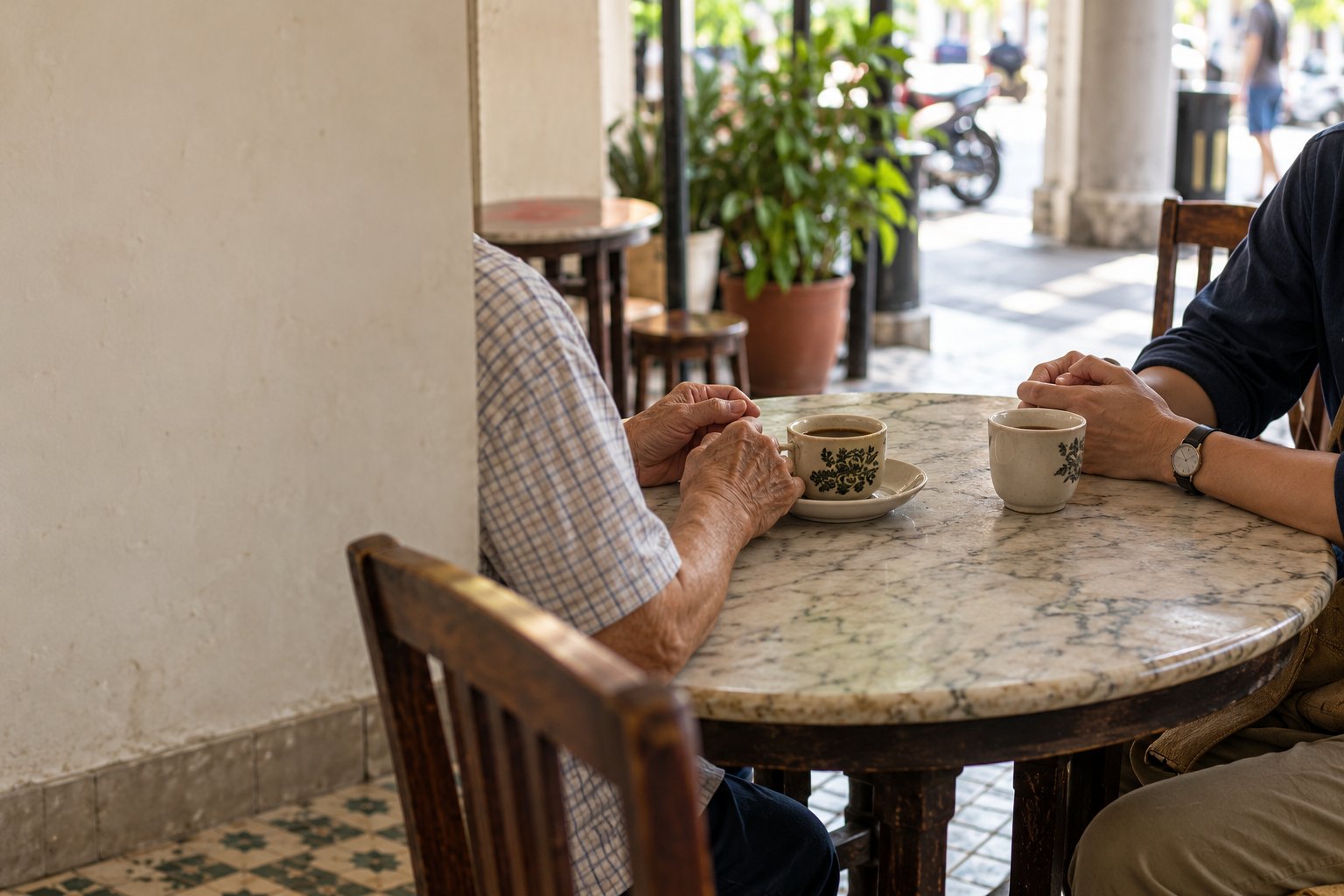
- A kopi with your herbs during crunch season: see the first question below.
- Direct-sales supplements, "secret family recipes" brought from overseas or bought online: why a supplement whose label says 红曲 or "red yeast rice" is something to tell both your doctor and your practitioner is in the red yeast rice passage of "Can You Take Chinese Herbs With Western Medication?" (/chinese-herbs-with-western-medicine/).
The words in this part
All four are written into the material quoted in this part, and all four are words you may meet at a clinic, on a dispensing label, or on a pre-surgery form.
- Anaphylaxis (严重过敏反应) — the NHS's description: a life-threatening allergic reaction that happens very quickly, which can be caused by food, medicine or insect stings. It is the one situation in this part that goes to 999.
- Anaesthetics (麻醉药) — the medicines used during an operation. Singapore's HealthHub (Ministry of Health, content by the Health Sciences Authority) notes that some Chinese proprietary medicines may interfere or interact with anaesthetics and other medicines used during surgery.
- Side effects (副作用) — Singapore's HealthHub (Ministry of Health, content by the Health Sciences Authority) notes that Chinese proprietary medicines carry information on their documented side effects on their labels, and its examples are nausea and vomiting.
- Taking with warm water (送服) — the Chinese Medicine Regulatory Office's pamphlet "General Knowledge of Taking Chinese Medicines" states that Chinese medicine is generally taken with warm water. That is what "take with warm water" on a dispensing label refers to.
A note: this section is general information only. For conditions like these, follow your doctor's diagnosis and treatment, and seek medical attention when you need it.
Frequently asked
Can I drink coffee while taking Chinese herbs? The Chinese Medicine Regulatory Office's pamphlet "General Knowledge of Taking Chinese Medicines" states that Chinese medicine is generally taken with warm water and that, unless the TCM practitioner instructs otherwise, strong tea is generally not to be drunk at the same time; the pamphlet's pictograms list coffee among the things not to take together with tonifying herbs and with cooling herbs. The pamphlet gives no number of hours for coffee. Which class your prescription belongs to, and how far apart to keep the coffee, is a question for the practitioner who wrote it.
I already see a TCM practitioner — do I still need to tell my doctor? Yes. That is the first item above: let both sides know what you take. Running both together is fine — bring your reports to the consultation, and take what you hear at the consultation back to your doctor. Do not stop, reduce or adjust any Western medication because you have started taking herbs — never stop or adjust your Western medication on your own.
Do not: stop, reduce or adjust any Western medication because you have started taking herbs.
The other five parts
- Part 1: Do Chinese herbs carry risks? Which class has the record, and how Malaysia regulates it
- Part 2: The class with the record: what the record says, and why registration screening catches it
- Part 3: Can I take what I bought? Reading and checking the MAL number and Meditag
- Part 4: One table: what you are holding, and how to check it
- Part 5: Storing Chinese herbs — herbs and 凉茶 ingredients in a hot, humid climate, and when "too long" starts
👉 If you are unsure whether "this packet of herbs, or this bottle of proprietary medicine in my hand, is actually right for me to use", you are welcome to book an online consultation with HansMed, where a practitioner registered under the T&CM Act 2016 assesses it with you; if any of the situations listed in this part applies to you, ask your doctor and your practitioner first.
Sit with a licensed TCM practitioner from wherever you are.
HansMed Modern TCM
For general wellness education only — not medical advice. Consult a registered TCM practitioner for personal guidance.
Sources
- Singapore MOH HealthHub, "Chinese Proprietary Medicine", contributed by the Health Sciences Authority, page last reviewed 24 July 2025 — https://www.healthhub.sg/well-being-and-lifestyle/personal-care/chinese_proprietary_medicine
- NHS, Anaphylaxis, page last reviewed 21 June 2023 — https://www.nhs.uk/conditions/anaphylaxis/
- Chinese Medicine Regulatory Office, Department of Health, Hong Kong, pamphlet "General Knowledge of Taking Chinese Medicines" — https://www.cmro.gov.hk/files/b5/useful_information/public_health/pamphlet/General_Knowledge_of_Taking_Chinese_Medicines_tc_pp.pdf