
"My aunt says I have heavy dampness and told me not to drink iced drinks. Is that real?" A question that comes up often is this one, from someone a family member has just "diagnosed", still holding a kopi peng.
The answer first. In TCM theory, iced drinks and raw-cold food slow the spleen-stomach's work of handling fluids, so "drink less iced" really is one of that theory's standard counsels on dampness (湿). Whether you personally count as "heavy dampness" is something the theory cannot conclude; a consultation can.
These six things set out dampness in Malaysia: what it is, why it is mentioned so often here, which habits count, who should ask before a dampness tea, how the theory says it happens, and what a practitioner does about it.
I. What "dampness" is in TCM theory
Dampness is one of the "Six Excesses" (六淫) in TCM theory. The WHO's 2022 standard terminologies on traditional Chinese medicine define the six excesses as six exogenous pathogenic factors: wind, cold, summer-heat, dampness, dryness and fire. [WHO-2022]
The theory holds they can affect the body's state when they exceed its capacity to adapt. The framework explains the relationship between a person and their environment; it is not the aetiology of modern medicine.
TCM theory describes dampness with three words: heavy, turbid, sticky.
- Heavy: the body feels weighed down, sluggish, hard to get going.
- Turbid: secretions or excretions look unclear.
- Sticky: lingering and recurring, slow to arrive and slow to leave.
The theory has one more key player: the spleen (脾). The TCM spleen is not the anatomical organ but a set of functions called "transformation and transportation" (运化): turning food and drink into what the body can use, and moving the surplus fluid out.
The theory holds that when this slows, fluid tends to linger. That is why dampness is tied to eating habits, and it is where section III begins.
💡 Remember: TCM dampness is a descriptive theoretical language, not a laboratory marker and not a disease name.
II. Why dampness comes up so often in Malaysia
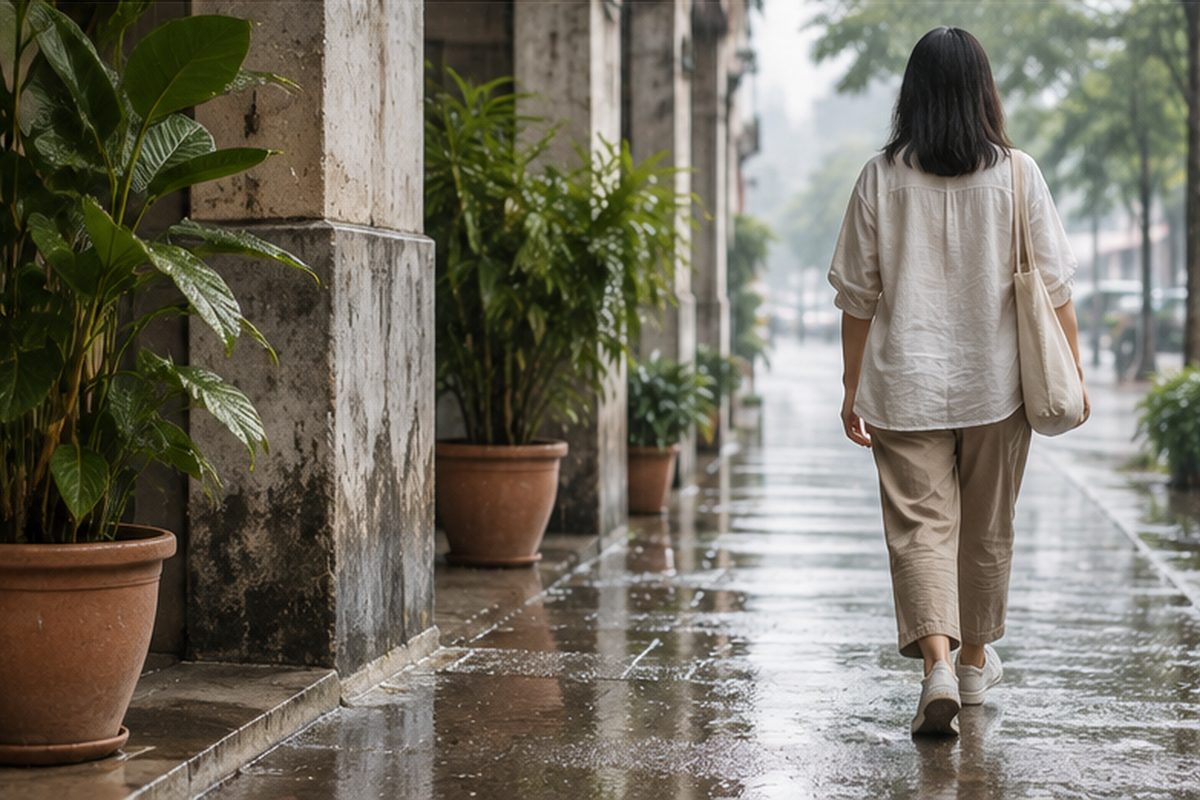
This section has numbers, from government meteorological data.
The Malaysian Meteorological Department describes the country's climate as uniform temperature, high humidity and copious rainfall. [MET-MY] The same page states that the maximum daily average relative humidity is over 94% everywhere and may reach 100%, and that the daily minimum ranges by season, as low as 42% in the dry months and as high as 70% in the wet months. [MET-MY]
Station data published by the Department of Statistics Malaysia (sourced from the Meteorological Department) show annual mean relative humidity in 2021 across the 41 published stations ranging from 72.9% (Petaling Jaya) to 88.7% (Cameron Highlands), with Subang at 75.2%, KLIA 78.2%, Kuching 85.2% and Kota Kinabalu 82.7%. [DOSM-2021]
How TCM theory reads those numbers. The theory classes the environmental climate as an "external factor": ambient dampness is a background condition the body is always dealing with. So there is an environmental reason dampness comes up so often here.
But the external factor is only half. The theory also lists diet, daily rhythm and living environment as "internal factors", and that half is the part you can arrange. Two people living in the same PJ area can, in the theory, have completely different dampness; the difference lies in the habits in section III.
The same environment, from the Western side. The WHO's "Heat and health" fact sheet states that whether the body can eliminate the heat its own metabolism generates depends on environmental heat stress, with high temperature, high humidity, low wind and high thermal radiation as its examples. [WHO-HEAT]
In other words, in the WHO's account high humidity is one of the conditions that make it harder for the body to eliminate heat. TCM theory speaks of transformation, not of heat loss. The two accounts sit side by side, each on its own terms, and this article does not blend them.
⚠️ A note: climate is a theoretical external condition, not a conclusion that living in Malaysia means heavy dampness.
III. Which daily habits TCM theory links to dampness
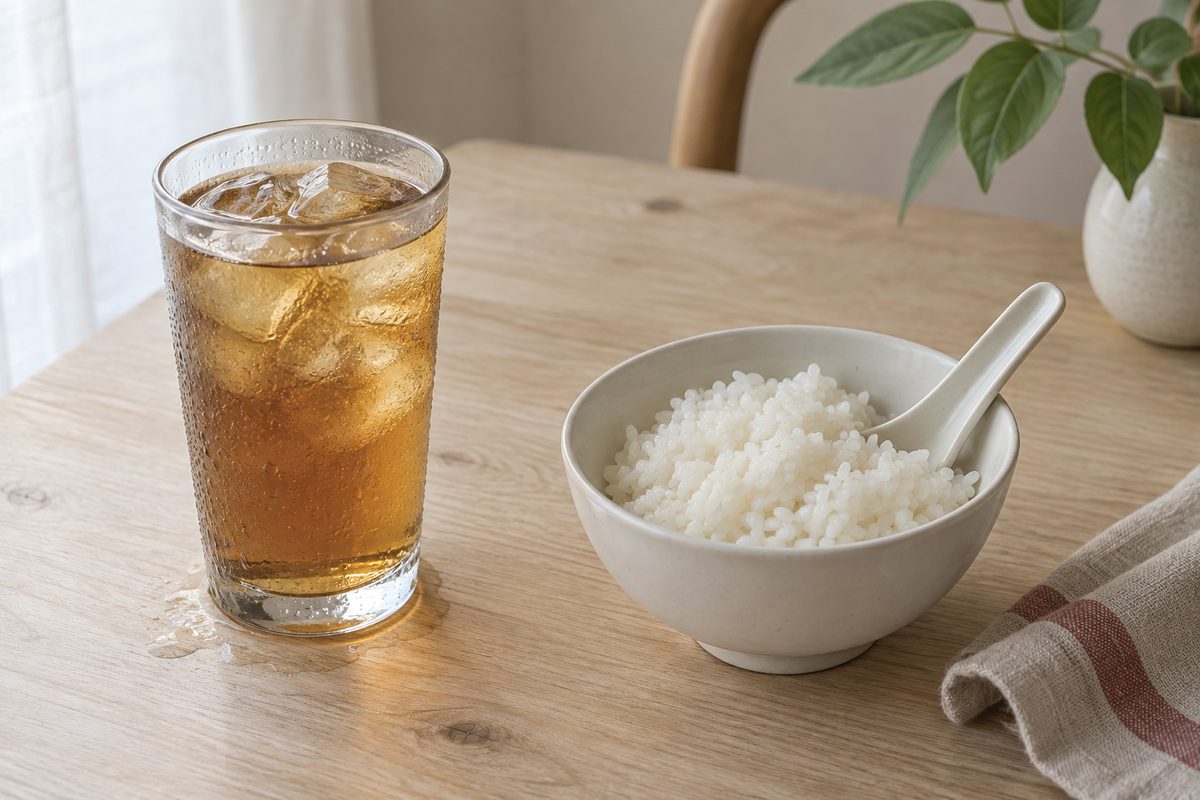
This is the section readers most want. Everything below is what the theory says; it describes habits, not outcomes.
① On the food side, the theory holds these add to the spleen-stomach's load:
- Iced drinks with meals: kopi peng, teh ais, ice water with rice. The theory holds that cold slows transformation.
- Raw-cold food: salads, sashimi, fruit straight from the fridge.
- Sweet, oily, fried: sweet drinks, kuih, fried food, heavy takeaway. The theory holds that "rich, sweet, greasy" food most readily generates dampness.
- Supper and late dinners: the theory holds the spleen-stomach should rest at night; eating before bed puts it on overtime.
② On the environment side, the theory holds these let external damp or cold reach the body directly:
- Air-conditioning blowing straight onto the body, especially a vent aimed at the bed or desk.
- Sleeping with wet hair, and sitting long in wet or sweat-soaked clothes.
- A damp, unventilated room: laundry drying indoors, windows never opened.
③ On the movement side: the theory holds that long sitting keeps qi from moving, and fluid does not move either.
The theory's counsel is just as simple:
| Situation | What TCM theory says | Usual practice | When to see a doctor first |
|---|---|---|---|
| An iced drink with every meal | The theory holds that cold slows spleen-stomach transformation; the standard lists a preference for cold food under the cause "dietary predilections" [WHO-2022] | Warm or room-temperature drinks with meals; iced ones between meals | Persistent bloating or diarrhoea after meals, or blood in the stool |
| Sleeping without drying your hair | The theory holds that external damp rises to the head, linked to the "head heavy as if wrapped" description; the standard characterises dampness as heavy and turbid [WHO-2022] | Dry hair before bed; if washing at night, wash earlier | Persistent headache; fever with a stiff neck means seek care now |
| Air-con blowing on the body | The theory holds that cold and damp "close off" together at the surface; the standard says pathogenic cold constricts qi and blocks the skin pores, and that dampness is yin in nature and can easily damage yang qi [WHO-2022] | Angle the vent away; keep a light jacket at the desk | Red, swollen or hot joints, or limited movement |
| Sitting all day | The theory holds that when qi does not move, damp does not move; the standard's "physical inactivity" entry says inactivity leads to stagnant qi of the spleen and stomach [WHO-2022] | Get up and walk daily; a walk after meals | One-sided leg swelling; chest tightness or breathlessness means 999 now |
| A damp room | The theory holds that a damp room is the living-environment source of external damp; dampness is one of the six exogenous pathogenic factors the standard lists [WHO-2022] | Open windows; dry laundry outside or on the balcony | Persistent cough, shortness of breath |
The "when to see a doctor first" column is not a description of dampness. It lists situations that get mixed up with it and should be ruled out by a Western doctor first.
💡 Remember: the theory governs the direction of habits: warm, moving, dry, ventilated. It does not tell you "what happens after"; that belongs in the consultation.
IV. Dampness teas and 薏米 water: who should ask first
Dampness teas, barley (薏米) water and dampness soup packs sit on the shelves of herbal-tea shops, Chinese medical halls, Guardian and Watsons. TCM theory treats them as food therapy or prepared Chinese medicine; in that theory, anything with an effect also has people it does not suit.
The list below is by situation, not by constitution. If any applies, ask before drinking:
- Pregnant, trying, or breastfeeding: Singapore's Ministry of Health notes that Chinese proprietary medicines carry information on documented side effects and contraindications, such as pregnancy and lactation, on their labels. [SG-2025] For these products and bottled dampness teas, ask a registered TCM practitioner first; if the label says it is not for use in pregnancy, do not drink it.
- Infants and children: the same page states that, in general, CPM should not be given to infants under 12 months unless advised by a TCM practitioner. [SG-2025] For older children, ask about dose and suitability first.
- On long-term Western medication: Singapore's Ministry of Health advises that if you are currently on any medication, talk to your doctor or physician before planning to take a CPM product as well. [SG-2025] We include over-the-counter dampness drinks in that bucket. Never stop your medication on your own.
- Diabetes, or managing blood sugar: bottled dampness teas and canned 薏米 water may be sweetened. Read the nutrition label before buying; if unsure, ask the pharmacist at the pharmacy counter.
- Older adults, before surgery, or a chronic condition under regular review: tell your doctor what dampness products you drink, and let the doctor judge.
A note: this section is general information only. For conditions like these, follow your doctor's diagnosis and treatment, and seek medical attention when you need it.
V. How the theory says it happens
Section III listed the habits the theory counts; section IV said who should ask first. This section goes one step in: in the theory's model, how dampness comes from a glass of iced coffee or an air-con vent.
The definitions below are from the WHO's 2022 international standard terminologies on traditional Chinese medicine, called "the standard" from here on. Only definition sentences are quoted, never a symptom list.
① The theory's model of fluids: the spleen governs transportation and transformation (脾主运化). The standard describes it as a collective term for the spleen's functions in transporting and transforming water, food and fluids: the spleen digests water and food, absorbs and distributes nutrients and regulates water metabolism. [WHO-2022]
In other words, in this model the "spleen" runs two lines at once: turning what is eaten into what can be used, and moving surplus water out. The "transformation" in section I means these two lines.
The standard completes the second half under "the source of phlegm generation": the spleen governs transportation and transformation of water and food, and its failure to transport and transform water fluids may cause internal retention of water dampness and generate phlegm. [WHO-2022] "Internal retention of water dampness" is where the theory's dampness comes from.
② Why "dampness" and not something else. The standard defines pathogenic dampness (湿邪) as a pathogenic factor that obstructs the flow of qi, characterised by heaviness, turbidity, stickiness and downward flowing. [WHO-2022] The three words in section I, heavy, turbid, sticky, come from here.
The standard has a further entry, "the spleen dislikes dampness" (脾恶湿): the spleen is intolerant of dampness; as an earth organ, it is intolerant of and affected by dampness. [WHO-2022] So in the theory dampness and the spleen are a pair: more dampness affects transformation; slower transformation lets water dampness linger more easily.
"Internal dampness" (内湿) is defined in the standard as the opposite of external dampness: a pathological state of retained water, dampness, phlegm and turbidity due to dysfunctions of the zang-fu organs and disordered water metabolism. [WHO-2022]
Section II's "external factor" corresponds to external dampness in the standard's terms; the "internal factors" of diet and daily rhythm act on where internal dampness comes from, transformation. A damp room is still external dampness; it simply reaches you at home.
③ Iced, greasy, late, seated: which link each one loads. The standard describes spleen yang (脾阳) as the activating, impelling and warming aspect of the spleen's function. [WHO-2022]
The standard also carries the entry "cold tends to impair yang" (寒易伤阳): cold is yin in nature and can easily impair yang qi. [WHO-2022] Put beside spleen yang, that is the theory's basis for treating iced drinks and raw-cold food as a load on the warming aspect; the step that counts cold food as this cold is the theory's common teaching.
Greasy and sweet: the standard's list of causes includes "dietary predilections", meaning excessive indulgence in specific food, including cold or hot food, certain flavours or alcohol. [WHO-2022]
The theory holds that rich, sweet, greasy food is harder to transform, which is why it is said to generate dampness readily; that too is common teaching.
Eating late: the standard's nearest entry is "dietary irregularities", meaning improper diet, including excessive hunger and binge eating. [WHO-2022] "The spleen-stomach should rest at night" is the theory's common teaching on daily rhythm; the standard has no separate entry for it.
Sitting: the standard's "physical inactivity" entry states that inactivity leads to imbalances in the flow of qi and blood, weak tendons and bones, and stagnant qi of the spleen and stomach. [WHO-2022] The sitting row in section III's table describes that relationship.
④ This is how TCM theory would read the day. Below, the model above is laid over an ordinary working day. It describes how the theory reads these habits, not any particular reader.
- Lunch: nasi campur with a kopi peng. The theory sees raw-cold food reaching the stomach, so the spleen-stomach's warming, impelling aspect has to work harder and transformation slows; the standard says cold is yin in nature and can easily impair yang qi. [WHO-2022]
- Two to six in the afternoon, seated directly under the vent. The theory files this as cold and damp reaching the body at the surface; the standard says dampness is yin in nature and can easily damage yang qi. [WHO-2022]
- Four hours without standing up. This matches the standard's "physical inactivity": stagnant qi of the spleen and stomach. [WHO-2022]
- Hair washed at eleven at night, asleep before it dries. The theory files this as external damp reaching the body through the head, the same as the row in section III.
- The theory's overall reading. Across the day the transformation line is slowed again and again, and surplus water lingers more easily; that is the "disordered water metabolism, retained water dampness" of the internal-dampness definition. [WHO-2022]
This passage describes the model, not a diagnosis. The same day landing on different people can, in the theory, turn out completely differently; that takes a consultation to know.
💡 Remember: in the theory, dampness is not only something that "comes in" from outside; it is also the result of the transformation line being slowed. That is why the theory's counsel lands on habits first.
VI. What a practitioner actually does at the consultation
With the theory covered, the last thing is how "do I have heavy dampness?" is handled inside a consultation.
- The practitioner looks at more than dampness. The consultation asks about diet, daily rhythm, work environment, bowel and bladder habits and sleep, then looks at the tongue. TCM theory holds that dampness can coexist with cold, heat, qi deficiency and other factors, so the practitioner judges the whole picture, not a single label.
- Three possible directions: acupuncture, Chinese herbs, and lifestyle adjustments. The herbs may be concentrated granule powder or a decoction; the lifestyle side means the kind of habits in section III. Which, and whether, is decided after the consultation.
- Not every "heaviness" is dampness. Lack of sleep, stress and an unbalanced diet produce similar feelings. If the practitioner thinks a Western medical check should come first, they say so.
- Dampness products are reviewed together. Mention the herbal tea, soup packs and direct-sales supplements you take, and the practitioner will advise on whether to continue those dampness products.
- The theory gives the direction; the practitioner gives your version. The table in section III is the theory's general rule; what you take away from a consultation is the version for you, and the practitioner's written instructions take precedence.
See a doctor first in these situations: persistent high fever, blood in the stool, or unexplained weight loss. For severe abdominal pain, chest tightness or breathlessness, or fever with a stiff neck, call 999 now, or go to the nearest hospital emergency department.
Fitting it into life in Malaysia
- Kopi peng, teh ais, Milo ais: the theory's direction is a warm drink with the meal. If you really want it iced, have it between meals, not alongside the rice.
- All day in an air-conditioned office: keep the vent off your body; keep a light jacket at the desk. The theory's concern is a cold draught on the body, not air-conditioning itself.
- Supper in overtime season and exam season: fried food and an iced drink at the mamak is the theory's "rich and greasy + raw-cold + late" all in one. Occasionally is not uncommon; if it becomes routine, follow the direction in section III.
- Rainy season and haze: in the rainy season rooms turn close and damp; the theory's advice is ventilation, with laundry on the balcony. On haze days with windows shut, use a dehumidifier or extractor fan.
- Dampness tea from the herbal-tea shop, soup packs from the medical hall, dampness supplements from direct sales: check the five situations in section IV before buying.
- Confinement (坐月子): confinement diets have their own traditional arrangements. Whether dampness-clearing ingredients suit yours is a question for the TCM practitioner in charge, not an online recipe.
Frequently asked
Does sleeping with wet hair cause heavy dampness? TCM theory holds that sleeping with wet hair is one route by which external damp rises to the head, linked to the description "head heavy as if wrapped"; so the theory's counsel is to dry it before bed. This is a statement about habit, not a prediction of what one wet night will do. If you have a persistent headache, see a doctor first; fever with a stiff neck means seek care now.
Does sleeping in an air-conditioned room count? The theory's concern is a cold draught blowing on the body, not air-conditioning itself. For sleeping in air-con, the theory's practice is: vent not aimed at the bed, blanket on, temperature not too low. A vent aimed at the head or neck all night is the kind the theory would change.
Does drinking dampness tea help? TCM theory treats dampness tea as food therapy or prepared Chinese medicine, something with an effect, so the theory's answer is "it depends who drinks it and what is in it". The five situations in section IV ask first. For everyone else, the theory's principle is to treat it as a supplement, not as a substitute for changing the habits in section III.
I often feel heavy in the body. Does that mean I have heavy dampness? Heaviness is one of TCM theory's three descriptors of dampness (heavy, turbid, sticky), so the theory counts it as one clue, but never concludes on it alone; lack of sleep, stress and an unbalanced diet feel the same. The practitioner reads it together with diet, daily rhythm and the tongue. With persistent high fever, blood in the stool or unexplained weight loss, see a doctor first.
Is "heavy dampness" a Malaysian-wide condition? The Meteorological Department describes Malaysia's climate as high in humidity. [MET-MY] TCM theory classes that climate as an external factor, so there is a reason dampness comes up so often here. But the theory also holds that internal factors, diet, daily rhythm and living environment, decide the difference between people. Two people in the same city can be completely different.
Which Western medical condition does TCM "dampness" correspond to? There is no one-to-one match. Dampness is a theoretical description; a Western diagnosis rests on pathology and tests. The two systems each look at their own thing, which is why they can be used side by side. In practice: the situations in the "when to see a doctor first" column of section III are ruled out by a Western doctor first; the rest is assessed by a TCM practitioner through pattern differentiation at the consultation.
In closing
✅ Remember these:
- "Drink less iced" is one of TCM theory's standard counsels on dampness; the theory treats iced drinks and raw-cold food as factors that slow spleen-stomach transformation.
- Malaysia's humidity really is high (Meteorological Department [MET-MY], Department of Statistics [DOSM-2021]); the theory treats it as the external factor, and diet, daily rhythm and living environment as the half you can arrange.
- The theory's direction in four words: warm, moving, dry, ventilated: warm drinks with meals, move daily, dry your hair, air the room (and stay out from under the vent).
- Dampness teas and 薏米 water have five ask-first situations: pregnancy and breastfeeding, infants and children, long-term medication, blood-sugar control, older adults or pre-surgery.
- The theory's model is "the spleen governs transportation and transformation": the spleen digests water and food, distributes nutrients and regulates water metabolism (WHO terminology standard [WHO-2022]); when transformation slows, water dampness lingers, and that is where the theory's dampness comes from.
- The answer to "do I have heavy dampness?" lives in the consultation, where the practitioner reads the whole picture; acupuncture, Chinese herbs and lifestyle adjustments are decided after it.
❌ Don't do this:
- Don't treat "living in Malaysia" as a conclusion of "definitely heavy dampness".
- Don't stop or reduce any Western medication because you have started a dampness tea or TCM.
- Don't read the table in section III as a self-diagnosis checklist; it is a direction for habits, not a disease name.
👉 If you are not sure what the idea of dampness would mean in your own case, you are welcome to book an online consultation with HansMed, where a practitioner registered under the T&CM Act 2016 can assess it with you.
Reviewed by Mr. Lim Gao Hong, a TCM practitioner registered with Malaysia's Traditional and Complementary Medicine Council under the T&CM Act 2016, practising in general TCM, pain management and internal medicine.
Sit with a licensed TCM practitioner from wherever you are.
HansMed Modern TCM
For general wellness education only — not medical advice. Consult a registered TCM practitioner for personal guidance.


