Acupuncture is probably the most widely known part of TCM, and the most widely misunderstood.
Most people know it involves needles. Rather fewer have a clear picture of why those points, what happens during and after a session, or how many sessions are involved.
That is what this article covers.
1. The theory: how TCM explains acupuncture
Explaining this properly requires accepting one premise up front: this is TCM's theoretical framework, describing the body in its own language.
In that framework the body is treated as an interconnected whole, containing a system known as the meridians (经络) — along which, in theory, qi and blood move, linking the surface of the body to the organs within. Acupuncture points are specific locations on that system.
Acupuncture means needling at selected points, understood within TCM theory as a way of regulating the overall state.
Two things are worth stating plainly here.
First, the meridian system is a theoretical framework — it is not the same thing as blood vessels or nerves in anatomy. It is how TCM describes and explains the body, with its own internal logic and a long history of use behind it.
Second, we are not going to claim what acupuncture can achieve. An educational article is not the right place — and is not equipped — to reach a conclusion about your situation. This article explains what acupuncture is and what a session involves. Whether it suits you requires assessment by a registered practitioner.
2. What "deqi" means
If you have asked someone who has had acupuncture, you may have heard it described as an achy, distended feeling.
TCM has a concept for this: deqi (得气) — a particular sensation arising when the needle reaches a certain depth and position. It is traditionally described as aching, tingling, distension, heaviness, or a spreading sensation travelling in some direction. In TCM theory it is regarded as one sign that the needling has produced a response.
Worth distinguishing: in the traditional descriptions, deqi and pain are two different things. If what you feel is sharp or burning, that is not deqi — tell the practitioner immediately.
3. What happens in a session
What follows is general clinic practice for an acupuncture session; arrangements vary between clinics and practitioners.
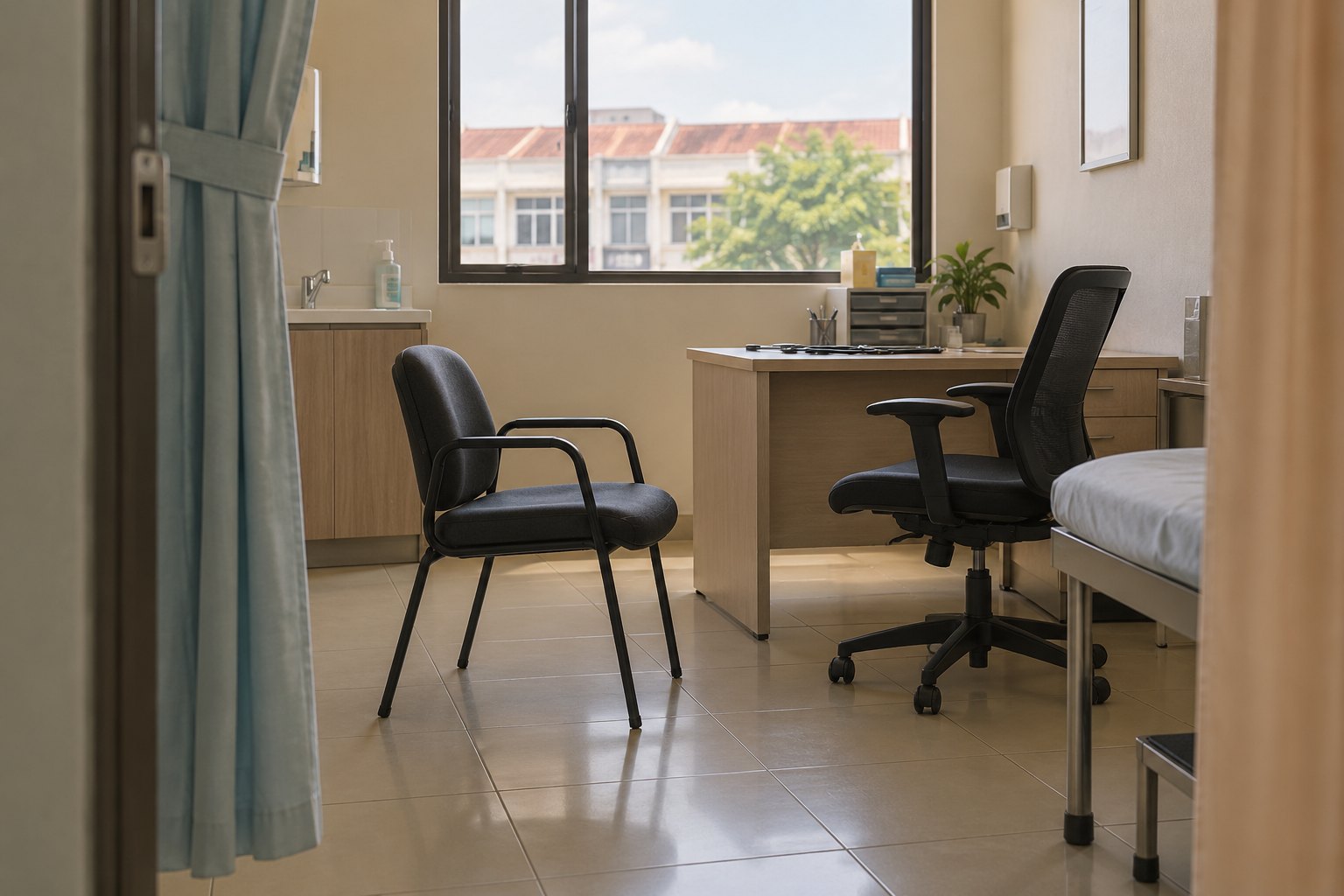
Consultation and assessment. The practitioner takes a history and forms an assessment. A first session usually runs longer, because the questioning is broad.
Point selection. Points are chosen from the assessment. The part that surprises people: where the needles go is not necessarily where the discomfort is. Point selection follows meridian theory, and using points on the hands and feet for concerns higher up is common practice.
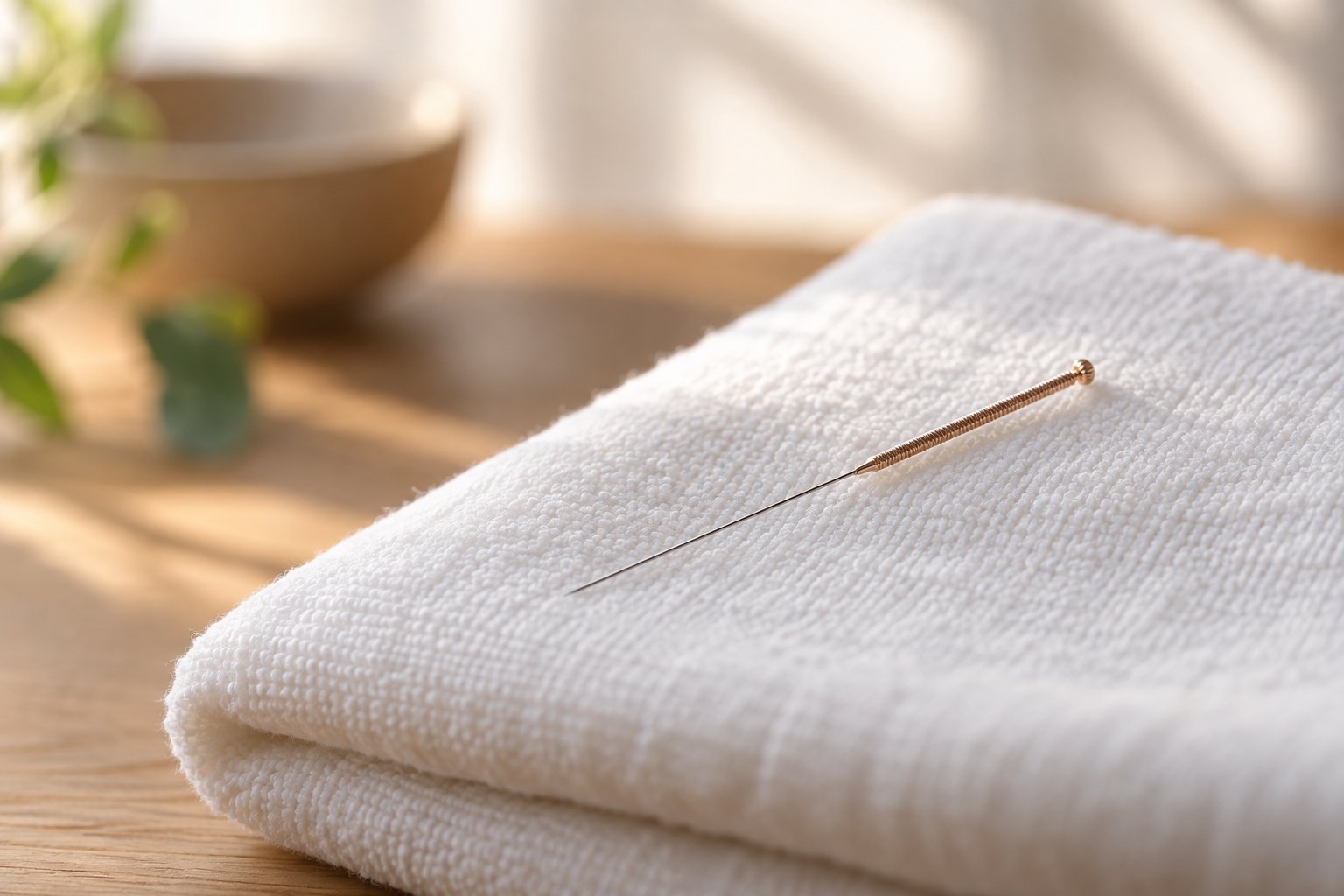
Insertion. The skin is disinfected first. Insertion is commonly described as a light tap or a brief prick, and at some points described as barely detectable.
Retention. Needles usually stay in for 15 to 30 minutes, and the retention time is spent lying quietly. The practitioner may adjust them partway through. Some sessions add other techniques — moxa attached to the needle handle (warm needling), or a mild electrical current (electroacupuncture).
Removal. Removal is commonly described as even less noticeable than insertion. The practitioner checks the sites and applies brief pressure where needed.
Afterwards. The practitioner explains what to be aware of that day, and suggests when to return.
4. How many sessions? How long is a course?
The most-asked question, and the hardest to answer in an article — because it genuinely varies between people.
What can be said is how it is arranged:
- The practitioner gives a suggested frequency and number when explaining their recommendation. This is the part to ask about.
- TCM adjustments are usually made in stages. The first plan is a starting point, not a fixed conclusion, and it is revised based on how things stand when you return.
- Being able to describe any change at your follow-up makes the assessment sharper. Nothing detailed is needed — whether sleep, energy and appetite are any different is enough.
Two questions worth asking directly: "Roughly when can we assess whether to continue?" "If nothing has changed, what would you adjust?"
The practitioner sets a point at which to review, rather than an open-ended arrangement.
5. Why we will not list what acupuncture treats
This section needs care.
Clinically, acupuncture is applied to non-urgent health concerns. The range varies between practice settings and between practitioners.
But this is not a list of what acupuncture treats, and we will not provide one. The reason is the same as for herbal prescriptions: whether it suits you depends on an assessment of you. Two people with the same complaint may be assessed differently, and handled differently.
If you want to know whether acupuncture fits your situation, the way to find out is to have a registered practitioner assess it — not to match yourself against an article.
6. When acupuncture is not the route
Difficulty breathing, chest pain, any change in consciousness, injury, or heavy bleeding — call 999 now, or go to the nearest emergency department.
Acupuncture is not the route for an emergency. TCM and Western medicine complement each other — this is not a choice between the two.
Separately, the following do not mean you cannot have acupuncture — they mean the practitioner needs to know beforehand in order to adapt:
- Taking anticoagulant medication, or any bleeding or clotting condition — tell the practitioner, and never stop prescribed medication on your own
- Pregnancy, or possible pregnancy — certain points carry specific considerations
- A pacemaker or other implanted electronic device — directly relevant to whether electroacupuncture is used
- Skin infection or an open wound at the intended site
- Previous fainting during needling
7. Common questions
Does it hurt? That deserves its own article. The short answer: an acupuncture needle and a hypodermic are different objects, but sensation differs between people and we won't presume yours.
→ In detail: Does Acupuncture Hurt? 5 Things to Know Before Your First Session
How many needles? It varies — anywhere from a few to a dozen or more.
How deep? It varies considerably by site and by assessment. The practitioner decides from experience.
Can acupuncture and tuina be done in the same session? Yes — combining them is common, arranged by the practitioner.
Can acupuncture be done online? No. It requires the practitioner to be physically present. No hands-on treatment can be delivered in an online consultation.
What should I wear? Loose clothing that rolls or lifts easily. If a specific area needs to be exposed, the practitioner will say beforehand.
In closing
Acupuncture is not "needle wherever it hurts", and it is not a one-off.
It is a staged approach, with points chosen under an overall assessment. What you can do is describe your situation clearly, say what worries you, and be able to report whether anything has changed when you return.
👉 If you are unsure what acupuncture actually involves and whether it suits you, you are welcome to book an online consultation with HansMed, where a practitioner registered under the T&CM Act 2016 can assess it with you.
Written and reviewed by Mr. Lim Gao Hong, a TCM practitioner registered with Malaysia's Traditional and Complementary Medicine Council under the T&CM Act 2016. Areas of practice: Acupuncture, Pain Management and General TCM.
Sit with a licensed TCM practitioner from wherever you are.
HansMed Modern TCM
For general wellness education only — not medical advice. Consult a registered TCM practitioner for personal guidance.