Part 2 of 7 in the "shoulder pain and frozen shoulder" series. The other six are listed at the foot.
Part 1 established that frozen shoulder is a medical diagnosis with three stages. This part looks one layer in: what is actually jamming the shoulder, and what a doctor's hands are testing.
The short version
- The shoulder is a ball-and-socket joint made up of three bones, surrounded by strong connective tissue called the shoulder capsule — that is how the AAOS patient page explains it.
- In frozen shoulder it is this capsule that goes wrong: the page states that it thickens and becomes stiff and tight, that thick bands of tissue called adhesions develop, and that in many cases there is less synovial fluid in the joint.
- So what jams the shoulder is not muscle but the capsule drawing tight — the page states that in frozen shoulder both active and passive range of motion are limited.
- What the pain is like: the page records it as usually dull or aching, typically worse early in the course and when you move your arm, usually over the outer shoulder and sometimes the upper arm.
- A doctor's hands are testing three things: both kinds of range of motion (passive and active), strength, and the neck. Each maps to one or more rows of the table in part 3.
- This part gives no movements: the NHS says plainly not to make up your own strenuous exercises, so "walking the wall" is not here.
First, the things that cannot wait
Persistent numbness, loss of feeling or marked weakness in the arm or fingers; sudden severe pain, being unable to move the arm, or a change in shape after a fall, blow or clear injury; redness, swelling or heat in the shoulder, or persistent fever — get urgent help, do not wait.
Left shoulder pain with chest tightness, chest pain, breathlessness or a cold sweat — this is an emergency, not a consultation booking. Call 999 now, or go to the nearest hospital emergency department.
The full list, and the reason for each, are in part 6. TCM and Western medicine complement each other; it is not a choice between them.
A note: this section is general information only. For conditions like these, follow your doctor's diagnosis and treatment, and seek medical attention when you need it.
I. How it actually happens: the capsule thickens and tightens
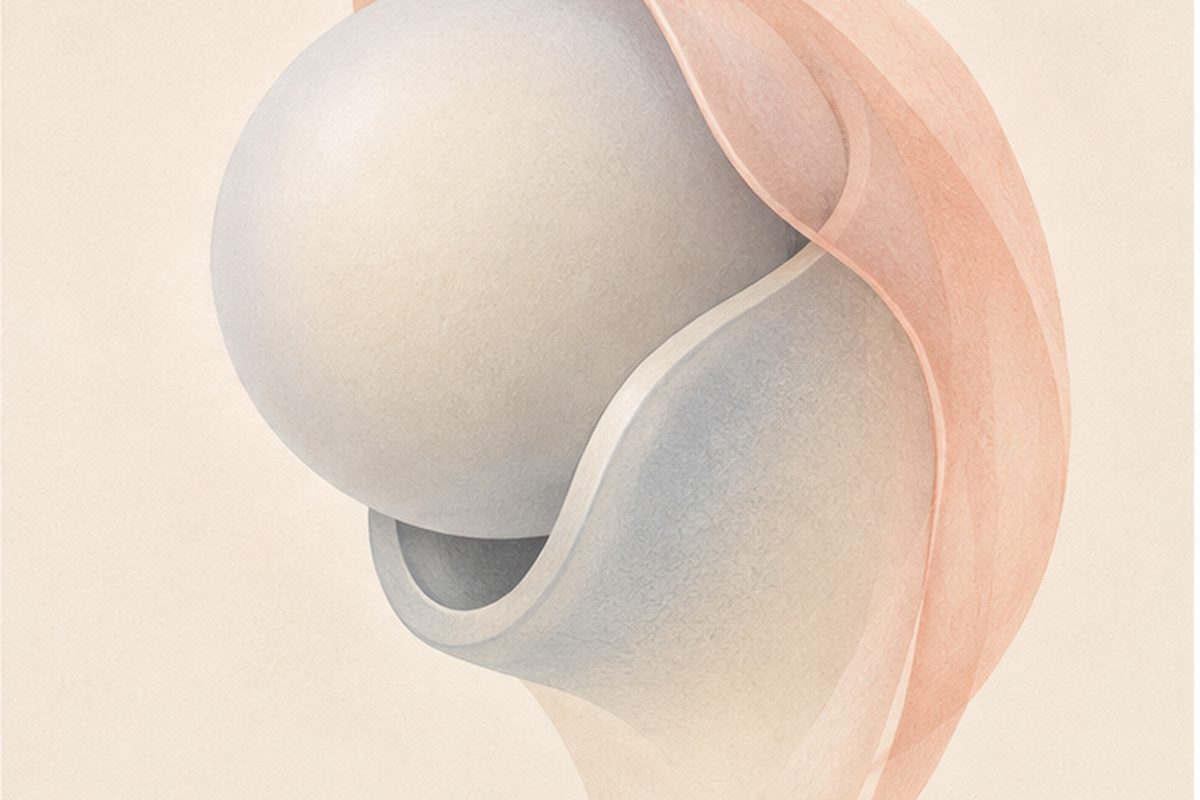
Start with how the shoulder is built. The AAOS explains: the shoulder is a ball-and-socket joint made up of three bones — the humerus (upper arm bone), the scapula (shoulder blade) and the clavicle (collarbone); the head of the upper arm bone fits into a shallow socket in the shoulder blade.
Surrounding the joint is strong connective tissue called the shoulder capsule; synovial fluid lubricates the capsule and the joint so the shoulder moves more easily.
In frozen shoulder, it is this capsule that goes wrong. In the page's words: the shoulder capsule thickens and becomes stiff and tight; thick bands of tissue called adhesions develop; in many cases there is less synovial fluid in the joint.
The same page puts it another way: the smooth tissues of the shoulder capsule become thick, stiff and inflamed.
In plain terms: what jams the shoulder is the capsule around the joint itself drawing tight.
That is also why part 1 says "unable to move it, on your own or with help" — once the capsule is tight, it makes no difference who lifts. (The link in this paragraph is this article's reading, not the AAOS's wording.)
What the pain is like. The page records frozen-shoulder pain as usually dull or aching; typically worse early in the course and when you move your arm; usually located over the outer shoulder and sometimes the upper arm.
As for why the capsule thickens, the page stops at "the causes are not fully understood" (part 1 quotes that sentence). This part stops there too.
💡 Remember: the problem in frozen shoulder is in the capsule, not the muscle. That is the starting point for everything the later parts distinguish.
II. What a doctor's hands are testing
Across its patient pages, the AAOS breaks the shoulder examination into a few questions. What follows describes what happens in an examination — it is not for you to do at home.
- ① Range of motion, measured two ways: the AAOS frozen-shoulder page states that the doctor moves your shoulder carefully in all directions to see whether movement is limited and whether pain occurs with the motion; the range when someone else moves your shoulder is called "passive range of motion". The doctor compares this to the range you show when you move it yourself ("active range of motion"); the page states that people with frozen shoulder have limited range of motion both actively and passively. So the answer to "does it go up if someone else lifts it?" changes which direction the doctor looks in.
- ② Strength: the rotator cuff tears page states that the doctor tests your arm strength in different positions and with different motions; "weakness when lifting or rotating your arm" is also one of the symptoms that page lists under rotator cuff tears.
- ③ The neck: the same page states that the doctor may also examine your neck to make sure the pain is not coming from a pinched nerve, and to rule out other conditions such as arthritis.
Each of these three questions maps to one or more rows of the table in part 3.
The NHS shoulder-pain page adds a position here: do not self-diagnose; see a doctor if you are worried. This part describes the examination so that you can describe your shoulder more precisely at the visit, not so that you can reach a conclusion yourself.
Which is also why you should not "walk the wall" on your own. Self-stretching routines circulating online may not suit your situation. Any movement aimed at the shoulder joint should be guided by a doctor, physiotherapist or TCM practitioner who has examined you. The NHS says it plainly: do not make up your own strenuous exercises. So this part gives no movements at all — not one.
💡 Remember: this section sets out what the examination is asking. What answers those questions is a doctor's hands, with imaging where needed.
A few terms from this part
All five come from the pages cited above, and you may meet them at a clinic or on a referral letter.
- Shoulder capsule (肩关节囊) — the AAOS's description: strong connective tissue surrounding the shoulder joint. It is what thickens and tightens in frozen shoulder.
- Synovial fluid (滑液) — the same page: the fluid that lubricates the capsule and the joint so the shoulder moves more easily. The page states that in many cases of frozen shoulder there is less of it in the joint.
- Adhesions (沾黏) — the same page's word for the thick bands of tissue that develop. It is the "adhesive" in frozen shoulder's formal name, adhesive capsulitis.
- Passive range of motion (被动活动范围) — the same page's definition: the range of motion when someone else moves your shoulder.
- Active range of motion (主动活动范围) — the same page's definition: the range you display when you move your shoulder yourself. The page states that in frozen shoulder both are limited.
Frequently asked
If it does go up when someone else lifts it, does that rule out frozen shoulder? The sources do not say that. The one thing the AAOS states is that people with frozen shoulder have limited range of motion both actively and passively. It does not say what a normal passive range means, so neither does this part. Comparing the two ranges is what a doctor does, and the conclusion belongs to the doctor.
Should I measure my own range of motion at home first? There is no need to test it yourself, and no need to force the arm up. That question is part of the examination. What you can prepare is the description: which direction will not go (forward, to the side, reaching behind the back), when it is most obvious, and how long it has been going on. Any movement aimed at the shoulder joint should be guided by a doctor, physiotherapist or TCM practitioner who has examined you.
Better not to: follow an online video and force the shoulder through a stretch to "test" your range.
The other six parts
- Part 1: What frozen shoulder is, and who tends to get it
- Part 3: What else it could be: five directions in one table
- Part 4: How TCM sees it: wind-cold-damp and bi-impediment
- Part 5: What the theory advises, and heat
- Part 6: When to see a doctor first
- Part 7: What an online consultation can do, and what else to tell it
👉 If you are not sure "where my shoulder should go next", you are welcome to bring it to an online consultation with HansMed, where a practitioner registered under the T&CM Act 2016 can assess it; if you do not yet have a firm diagnosis, or if anything in this part's "the things that cannot wait" or in part 6 applies, see a doctor first. In-person consultations are coming soon.
Sit with a licensed TCM practitioner from wherever you are.
HansMed Modern TCM
For general wellness education only — not medical advice. Consult a registered TCM practitioner for personal guidance.
Sources
- AAOS OrthoInfo, Frozen Shoulder, re-fetched 2 October 2026 — https://www.orthoinfo.org/en/diseases--conditions/frozen-shoulder/
- AAOS OrthoInfo, Rotator Cuff Tears, re-fetched 2 October 2026 — https://www.orthoinfo.org/en/diseases--conditions/rotator-cuff-tears/
- NHS, Shoulder pain, page last reviewed 22 May 2023 — https://www.nhs.uk/conditions/shoulder-pain/