Part 6 of 6 in the "Chinese herbs and Western medication" series. All six are listed at the foot.
The first five parts covered how interactions happen, what a gap reaches, and which drug classes need extra care. The last thing is how the question is handled inside a consultation.
The short version
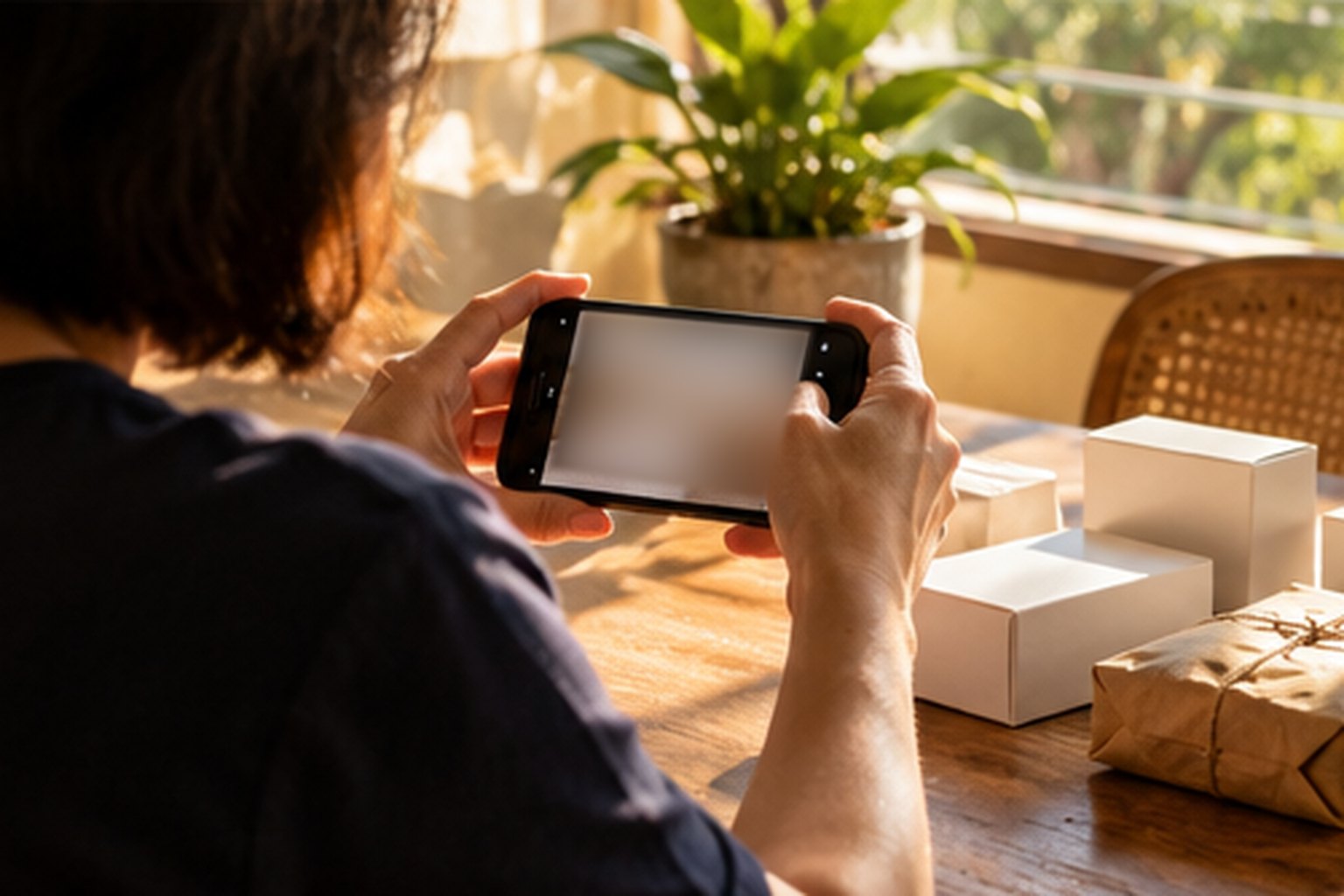
- The medication list comes before the prescription. The practitioner looks at every Western medication, supplement and herbal tea you take before deciding what to prescribe. The easiest way is to photograph the boxes.
- The prescription is written with your list in view. Where there is a concern, the practitioner takes a different direction, or asks you to confirm with the prescribing doctor first.
- The spacing is written down. When to take it and how far from your Western medication go in the prescription notes. You do not apply a rule of thumb yourself.
- Both sides are told. At your next Western appointment, mention the herbs.
- This series gives examples, not a "clash list" — a list gets read as a safe-list.
- In Malaysia: chronic-disease medication from a government clinic counts, so does what you buy at a pharmacy counter, and so do soup packs from a medical hall and the tonic soup made at home.
First, the one thing never to do
⚠️ A safety note: TCM and Western medicine complement each other. It is not a choice between them. Do not stop, reduce, or adjust any prescribed Western medication because you have started seeing a TCM practitioner — changes to a prescription are decided by the doctor who wrote it. Never stop on your own.
The full account is in part 1.
A note: this section is general information only. For conditions like these, follow your doctor's diagnosis and treatment, and seek medical attention when you need it.
I. What actually happens at the consultation

- The medication list comes before the prescription. The practitioner looks at every Western medication, supplement and herbal tea you take before deciding what to prescribe. The easiest way is to photograph the boxes and show them.
- The prescription is written with your list in view. If an ingredient raises a concern against one of your drug classes, the practitioner takes a different direction, or asks you to confirm with the prescribing doctor before starting.
- The spacing is written down. When to take it and how far from your Western medication go in the prescription notes. You do not apply a rule of thumb yourself.
- Both sides are told. At your next Western appointment, mention the herbs. If a doctor ever needs to work out where a reaction came from, that sentence can matter.
- Why the examples in this series are not a "clash list". The examples in parts 2 and 3, and every herb named in the part 4 and part 5 tables, come from the Hong Kong Hospital Authority's teaching material; the other three rows in part 5's table carry their own sources. All of them are there to show how an interaction happens. A list gets read as a safe-list, and every pair not on it gets treated as fine. Judging your combination needs your whole medication picture, so it belongs in the consultation, not in an article.
💡 Remember: your job is not to check a list yourself. It is to put the complete medication list in front of both practitioners.
II. Fitting it into life in Malaysia
- Chronic-disease medication from a Klinik Kesihatan: counts. Photograph it for the practitioner like everything else.
- Over-the-counter medicine and supplements from a pharmacy counter (Guardian, Watsons and the like): count. The pharmacist there is also someone you can ask, especially about the Western side.
- Herbal soup packs from a traditional Chinese medical hall, the tonic soup an elder made, the 凉茶 from the herbal-tea shop, the supplement from a direct-sales friend: all inside the consideration. Describe what is in them.
- Seeing a Western doctor and a TCM practitioner on the same day: photograph the doctor's prescription and show the practitioner, and the other way round.
III. The six parts in summary
✅ Remember these:
- Used properly, in most cases the two can be used together, which is the Hong Kong Hospital Authority's position; HansMed's condition is that both practitioners know. (Part 1)
- Interactions happen by six routes: absorption, distribution, metabolism, excretion, additive, antagonistic — that is the Hospital Authority's sorting. (Parts 2 and 3)
- At least one to two hours apart as a rule, but spacing only reaches the "together in the gut" part, not "in the body together". (Part 3)
- Narrow-window drugs like warfarin and digoxin come first; the other classes in the part 4 and part 5 tables, and anything before surgery, all need stating clearly.
- The prescription is written with your medication list in view and the spacing is written down. No rule of thumb needed. (This part)
- Supplements, vitamins, herbal teas and tonics all count. (Part 1)
❌ Don't do this:
- Don't stop, reduce or adjust any Western medication because you have started TCM.
- Don't treat "two hours apart" as a safety guarantee.
- Don't read the examples and classes in this series as a safe-list. Not listed is not cleared.
- Don't combine a red yeast rice product with a statin on your own; the Hospital Authority's position is that they should not be taken together. (Part 5)
The words in this part
These are the words the series hopes you take away. Each has its full account in its own part.
- Pharmacodynamics (药效学) — the Hong Kong Hospital Authority's gloss: what a medicine does to the body. Additive and antagonistic belong here. (Parts 1 and 3)
- Pharmacokinetics (药动学) — from the same material: what the body does to a medicine, which is the four stations of absorption, distribution, metabolism and excretion. (Parts 1 and 2)
- Narrow therapeutic window (治疗窗窄) — the Authority names this class as needing particular care, and gives warfarin and digoxin as its examples. It means the gap between the amount that works and the amount that causes trouble is small. (Part 4)
- Lovastatin (洛伐他汀) — the history the Authority records: approved in the United States in 1987 as the first statin drug. It is in the tablet, and it is in 红曲 red yeast rice — made by fermenting steamed rice inoculated with Monascus fungi, and used as food, in brewing and as a Chinese medicine. (Part 5)
- 凉茶 (herbal tea) — the Authority's lecture material notes that 凉茶 has no clear unified standard and each shop's recipe may differ. Which is why, on a medication list, it needs its ingredients described. (Part 1)
Frequently asked
I forgot to mention my Western medication at the TCM consultation. What now? Contact the practitioner now and add it. Hold off starting the herbs until the practitioner has seen the list.
Does herbal tea (凉茶) count? I only drink 五花茶. Yes. The Hospital Authority notes that 凉茶 has no clear unified standard, and each herbal-tea shop's recipe may differ. Its own example is 五花茶, "five-flower tea": among the recipes on the market, some use 鸡蛋花 frangipani, some swap it for 葛花 kudzu flower, and some use 绵茵陈 and 夏枯草 instead. So say which shop, which tea, and how often.
Do supplements and vitamins need spacing too, and do I mention them? Yes. Supplements and vitamins have active constituents just as herbs do, and they count as "things you take" — part 1 sets that out.
The other five parts
- Part 1: Can you take Chinese herbs with Western medication? The answer first, and the one thing never to do
- Part 2: How it actually happens: the four stations a medicine passes in the body
- Part 3: How far apart is far enough — and the two routes a gap does not reach
- Part 4: Which Western drug classes need extra care: the two with a narrow window, plus blood-pressure and blood-glucose medication
- Part 5: Red yeast rice and statins: when the supplement contains the drug, and three more classes to mention
👉 If you are on Western medication and want to know how Chinese herbs should be arranged around it, you are welcome to book an online consultation with HansMed, where a practitioner registered under the T&CM Act 2016 assesses it with your medication list in view. Make sure your doctor knows about the arrangement too; safety rests on both sides having the full picture.
Sit with a licensed TCM practitioner from wherever you are.
HansMed Modern TCM
For general wellness education only — not medical advice. Consult a registered TCM practitioner for personal guidance.
Sources
- Hospital Authority, Hong Kong, Smart Patient lecture deck, 《當中藥師遇見藥劑師——認識中西藥相互作用》, PDF created 9 July 2024 — https://www.smartpatient.ha.org.hk/smart-patient-web/useful-information/sp-series/sp-series-details/%E8%97%A5-%E5%AF%86-%E8%A7%A3%E9%8E%96%E8%AC%9B%E5%BA%A7
- Hospital Authority, Hong Kong, HASLink July 2024, "中西藥相互作用知多少" — https://www3.ha.org.hk/ehaslink/issue132/tc/feature-3.html