Part 5 of 6 in the "What Malaysians mean by heavy dampness" series. The list of the other five is at the foot of this part.
Part 4 set out the model's two lines. This part takes the four habits listed in part 2 and matches them one by one to a place in that model — and says plainly which sentence has an entry in the standard and which is only the theory's common teaching.
The answer first. Three of the four habits have a matching entry in the standard; three familiar sentences have none. Where there is an entry this part writes "the standard says"; where there is none it writes "common teaching" — kept apart from start to finish, and marked item by item below.
"The standard" below means the WHO's 2022 standard terminologies on traditional Chinese medicine; only definition sentences are quoted, never a symptom list.
The short version
- The standard describes spleen yang as the activating, impelling and warming aspect of the spleen's function, and carries a further entry, "cold tends to impair yang": cold is yin in nature and can easily impair yang qi.
- Put together, those two are the theory's basis for treating iced drinks and raw-cold food as a load on the warming aspect.
- The standard's "dietary predilections" means excessive indulgence in specific food, including cold or hot food, certain flavours or alcohol.
- For eating late, the standard's nearest entry is "dietary irregularities", meaning improper diet, including excessive hunger and binge eating.
- The standard's "physical inactivity" entry states that inactivity leads to imbalances in the flow of qi and blood, weak tendons and bones, and stagnant qi of the spleen and stomach.
A note: this section is general information only. For conditions like these, follow your doctor's diagnosis and treatment, and seek medical attention when you need it.
First, the things that cannot wait
⚠️ A safety note: TCM and Western medicine complement each other; it is not a choice between them. For severe abdominal pain, chest tightness or breathlessness, or fever with a stiff neck, call 999 now, or go to the nearest hospital emergency department.
Persistent high fever, blood in the stool, or unexplained weight loss means seeing a doctor first — the reason behind each is in part 6.
A note: this section is general information only. For conditions like these, follow your doctor's diagnosis and treatment, and seek medical attention when you need it.
I. Iced, greasy, late, seated: which link each one loads
Iced and raw-cold food. The standard describes spleen yang (脾阳) as the activating, impelling and warming aspect of the spleen's function.
The standard also carries the entry cold tends to impair yang (寒易伤阳): cold is yin in nature and can easily impair yang qi. Put beside spleen yang, that is the theory's basis for treating iced drinks and raw-cold food as a load on the warming aspect; the step that counts cold food as this cold is the theory's common teaching.
Greasy and sweet. The standard's list of causes includes dietary predilections (饮食偏嗜), meaning excessive indulgence in specific food, including cold or hot food, certain flavours or alcohol.
The theory holds that rich, sweet, greasy food is harder to transform, which is why it is said to generate dampness readily; that too is common teaching. The standard's chapter of causes has no entry for rich, sweet, greasy food generating dampness — the phrase appears there only in symptom and pattern passages, which this part does not quote.
Eating late. The standard's nearest entry is dietary irregularities (饮食不节), meaning improper diet, including excessive hunger and binge eating. "The spleen-stomach should rest at night" is the theory's common teaching on daily rhythm; the standard has no separate entry for it.
Sitting. The standard's physical inactivity (过逸) entry states that inactivity leads to imbalances in the flow of qi and blood, weak tendons and bones, and stagnant qi of the spleen and stomach. The sitting row in part 2's table describes that relationship.
💡 Remember: this section keeps two kinds of sentence apart — where the standard has an entry it says "the standard says"; where it does not, it says "common teaching". Losing that distinction means passing the theory's inference off as the standard's own words.
II. This is how TCM theory would read the day
Below, the model above is laid over an ordinary working day. It describes how the theory reads these habits, not any particular reader.
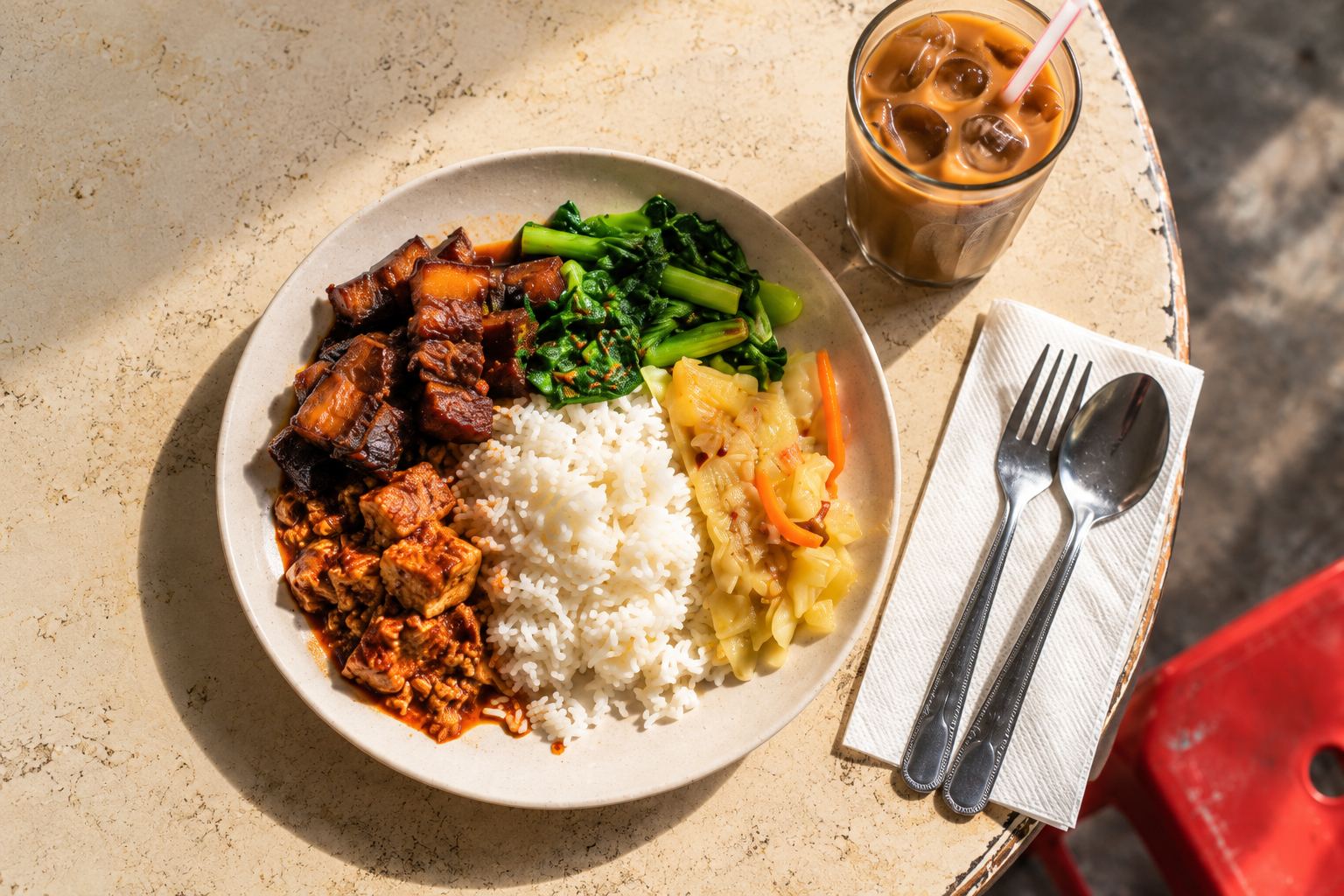
- Lunch: nasi campur with a kopi peng. The theory sees raw-cold food reaching the stomach, so the spleen-stomach's warming, impelling aspect has to work harder and transformation slows; the standard says cold is yin in nature and can easily impair yang qi.
- Two to six in the afternoon, seated directly under the vent. The theory files this as cold and damp reaching the body at the surface; the standard says dampness is yin in nature and can easily damage yang qi.
- Four hours without standing up. This matches the standard's "physical inactivity": stagnant qi of the spleen and stomach.
- Hair washed at eleven at night, asleep before it dries. The theory files this as external damp reaching the body through the head, the same as the row in part 2.
- The theory's overall reading. Across the day the transformation line is slowed again and again, and surplus water lingers more easily; that is the "disordered water metabolism, retained water dampness" of the internal-dampness definition.
This passage describes the model, not a diagnosis.
Put into life in Malaysia, that day usually has two more stretches in it:
- Kopi peng, teh ais, Milo ais: the theory's direction is a warm drink with the meal. If you really want it iced, have it between meals, not alongside the rice.
- Supper in overtime season and exam season: fried food and an iced drink at the mamak is the theory's "rich and greasy + raw-cold + late" all in one. Occasionally is not uncommon; if it becomes routine, follow the direction in part 2.
💡 Remember: the theory reads habits, not people. The same day landing on different people can, in the theory, turn out completely differently; that takes a consultation to know.
The words in this part
All five are entry headings in the WHO's 2022 standard terminologies on traditional Chinese medicine. Only their definition sentences are quoted here.
- Spleen yang (脾阳) — the standard: the yang qi of the spleen, as opposed to spleen yin; it refers to the activating, impelling and warming aspect of the spleen's function.
- Cold tends to impair yang (寒易伤阳) — the standard: cold is yin in nature and can easily impair yang qi.
- When damp prevails, yang declines (湿胜阳微) — the standard: dampness is yin in nature and can easily damage yang qi. The "seated under the vent" line in section II uses this entry.
- Dietary irregularities (饮食不节) — the standard: improper diet, including excessive hunger and binge eating.
- Physical inactivity (过逸) — the standard: inactivity leads to imbalances in the flow of qi and blood, weak tendons and bones, and stagnant qi of the spleen and stomach. The sitting row in part 2's table uses this entry too.
"Dietary predilections" is explained in part 2: excessive indulgence in specific food, including cold or hot food, certain flavours or alcohol.
"Transformation" (运化) is covered in parts 1 and 4: the spleen turns what you eat into what the body can use, and moves the surplus fluid out.
Frequently asked
Is "cold food harms the spleen" a sentence in the standard? Not as a sentence, but two entries put together are the basis for it: the standard says spleen yang is the activating, impelling and warming aspect of the spleen's function, and that cold is yin in nature and can easily impair yang qi. Counting the iced drink or raw-cold dish in front of you as that "cold" is the theory's common teaching, which the standard does not write. So this part states the first two as "the standard says" and the third step as common teaching.
Does "rich, sweet, greasy food most readily generates dampness" have a source? Not in the standard's chapter of causes. The phrase appears there only in symptom and pattern passages, and this part quotes none of that material. So it carries the "common teaching" label throughout the body; if a public-health or university TCM page is found that states it, the source will be added.
And "the spleen-stomach should rest at night"? Also no separate entry. The nearest the standard comes is "dietary irregularities", meaning improper diet including excessive hunger and binge eating — which is not about timing. So this part labels "rest at night" as common teaching as well.
Do not: read this day as your own diagnosis. The passage reads how habits land on the model; it does not say what will happen to any particular reader.
The other five parts
- Part 1: Why do Malaysians always say "dampness is heavy"? What dampness is in TCM theory, and what the humidity figures say
- Part 2: Which daily habits count — iced drinks, air-con and long sitting, and what the theory links to dampness
- Part 3: Dampness teas and 薏米 water: who should ask before drinking
- Part 4: The model inside the theory: the spleen governs transportation and transformation, and where dampness comes from
- Part 6: When to see a doctor first — each sign, and what it can mean
👉 If you are not sure which stretch of your own day to change first, you are welcome to book an online consultation with HansMed, where a practitioner registered under the T&CM Act 2016 can assess it with you.
Sit with a licensed TCM practitioner from wherever you are.
HansMed Modern TCM
For general wellness education only — not medical advice. Consult a registered TCM practitioner for personal guidance.
Sources
- World Health Organization, WHO international standard terminologies on traditional Chinese medicine (2022) — https://www.who.int/publications/i/item/9789240042322